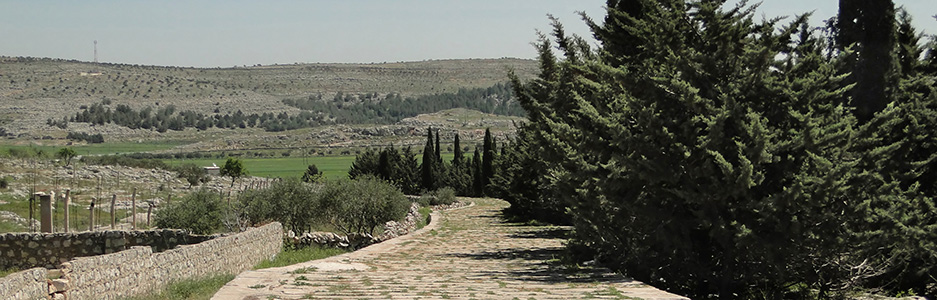
In my previous post, Avoiding Lukewarmness, I looked at Jesus’ letter to the church at Laodicea and argued that lukewarmness describes a church that is not producing disciples. Hot water heals and cold water refreshes, and both of them do something for the person who drinks. What is wrong with lukewarm water is that it does nothing for anybody.
The Laodiceans were not idle. Jesus knew their works. A church can be busy with programs, events, and genuinely good causes, yet if none of that activity results in changed lives — if it mostly gives good people a venue to keep doing what they were already doing — then it is lukewarm, however full the calendar looks.
It is tempting to hear that as a call to add something: a new program, a new class, a new initiative. But Jesus’ counsel to Laodicea was not to do something new. It was to buy from him the gold, garments, and salve they had been supplying for themselves. The problem was not what they were doing but where they were getting it. A church may not need different activities so much as a different source for the activities it already has.
What that looks like will vary from one congregation to the next. For me, as the previous post suggested, it began with prayer and listening: to the Spirit, to people who are engaged in church yet feel unfulfilled there, and to observers outside the church. One thing I kept hearing was how common it is to wall off one’s spiritual life from everything else, so that faith becomes something practiced mainly at church.
We have a tendency to put God in a church-shaped box. Part of the reason is that we rarely teach, in practical terms, how to live out the faith anywhere else. Classes help, but discipleship takes more than book learning. As with most things we learn, there is a separate step in which what we studied has to be put into practice in the real world, and that step usually needs help too.
One place to take that step may be closer than we think. Most churches rely on committees to carry out their work, and the reasoning is sound: a church needs planning and task management to get done what has to be done. Some committees are seasonal, while others meet throughout the year. It is common, though not universal, to open committee meetings with prayer and sometimes to close them that way. In between, however, they often function as essentially secular activities. After all, how spiritual does one need to be to arrange a potluck, coordinate AV volunteers, or update a budget?
I wonder whether that perspective leaves an opportunity on the table. If what we lack is discipleship — helping people practically walk out their faith once they leave church — then perhaps we could start by helping them walk out their faith in the “non-religious” work the church itself requires. Since that work is usually organized through committees, they seem like a reasonable place to begin.
Imagine treating committees not simply as vehicles for getting things done, but as vehicles for discipleship: places where people learn to apply the principles of their faith to practical, ordinary tasks. That, after all, is an important part of walking out our faith when we leave the building. A spiritually-focused budget meeting may be better preparation for Monday morning at the office than any class we could offer.
How might this change things? To begin with, each committee might include a spiritual leader whose role is to keep the group’s focus on Christ in everything it does. Prayer could become integral rather than ceremonial, part of every decision rather than bookends to the meeting. Bible study, devotionals, worship, and other spiritual practices might all find a place. The aim is for the committee’s work to be done with spiritual principles in mind, and for everyone to stay aware of the teachings of the faith that apply to the task at hand.
It might also make sense for committees to meet regularly even when there is no work to be done: to build relationships, to keep reflecting on how faith applies, or to look for new ways to serve others. The church still needs to be run, but running it would no longer be the whole point. The deeper purpose would be helping people grow spiritually.
There is no single right way to do any of this. Each group would probably be as unique as the people in it.
None of this requires a new program. The committees already exist, the potlucks still need arranging, and the budget still needs updating. What changes is the source and the goal. Laodicea was told to receive from Christ what it had been supplying for itself, and a committee that seeks him in its decisions is doing exactly that. When its real aim is obedience to him — making disciples — rather than task management, its resources come from him rather than from our own competence.
The letter to Laodicea ends with a shared meal, so perhaps it is fitting that one place to start is the committee planning the potluck. Christ is still knocking. Sometimes the door he is knocking on is the one to the fellowship hall.


